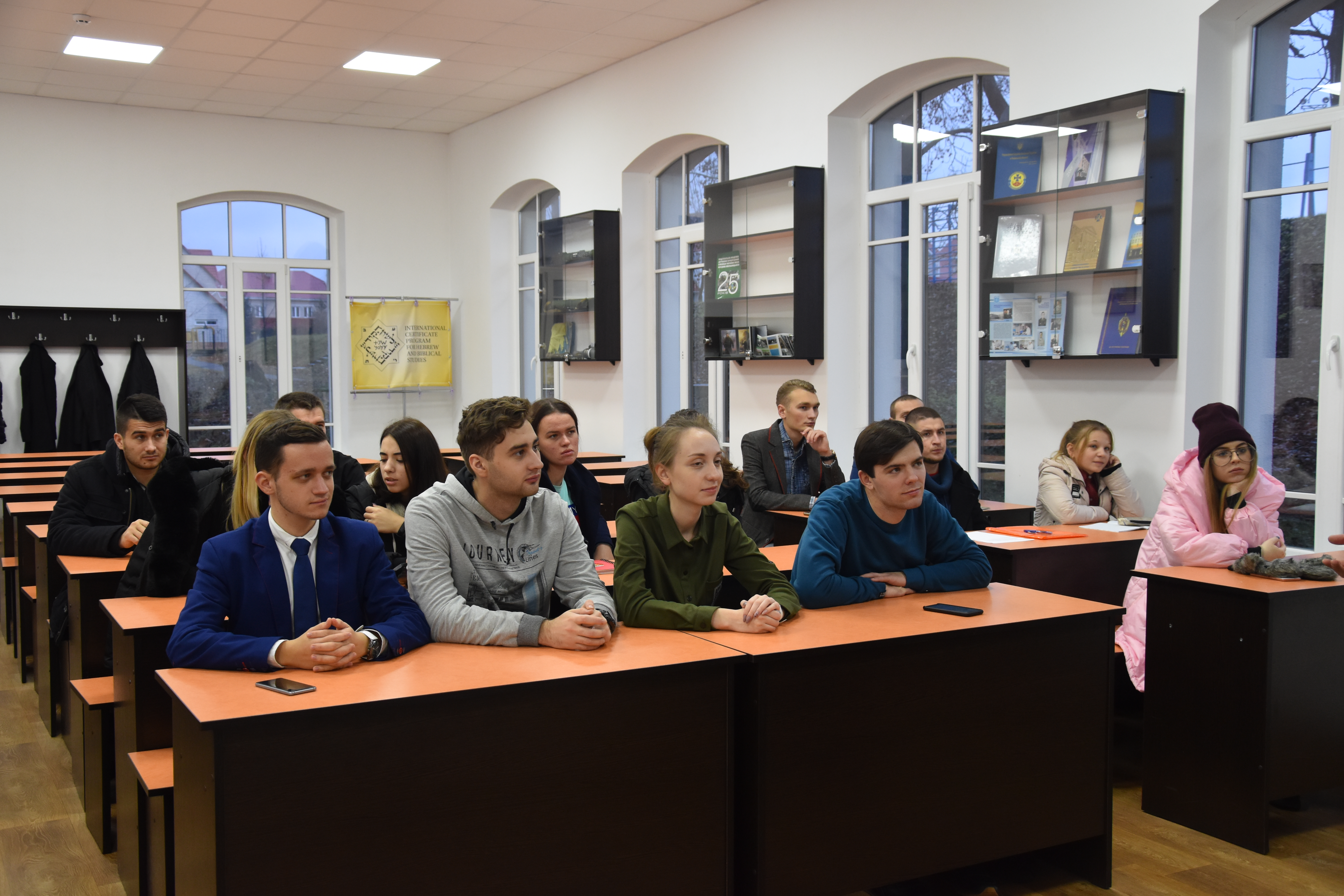

The main goal of the course «The Comparative Study of Demoratization: Transition Politics in V4 countries and Ukraine» initiated in the National University of Ostroh Academy in 2017, was to present a wider perspective of the democratic transition processes in Central and Eastern Europe. Partnering with the Visegrad Four nations’ experts in lecturing and holding discussion panels, the main attention was paid to the analysis of the democratic changes that took place in Poland, Czech Republic, Slovakia and Hungary, as well as to demonstrate efficient strategies of social, political and economic development for Ukraine considering the positive experience of the Visegrad Four. Besides, the better understanding of the regional political, economic and social processes will set an opportunity to seek additional ways to build up cooperation between Ukraine and the V4.
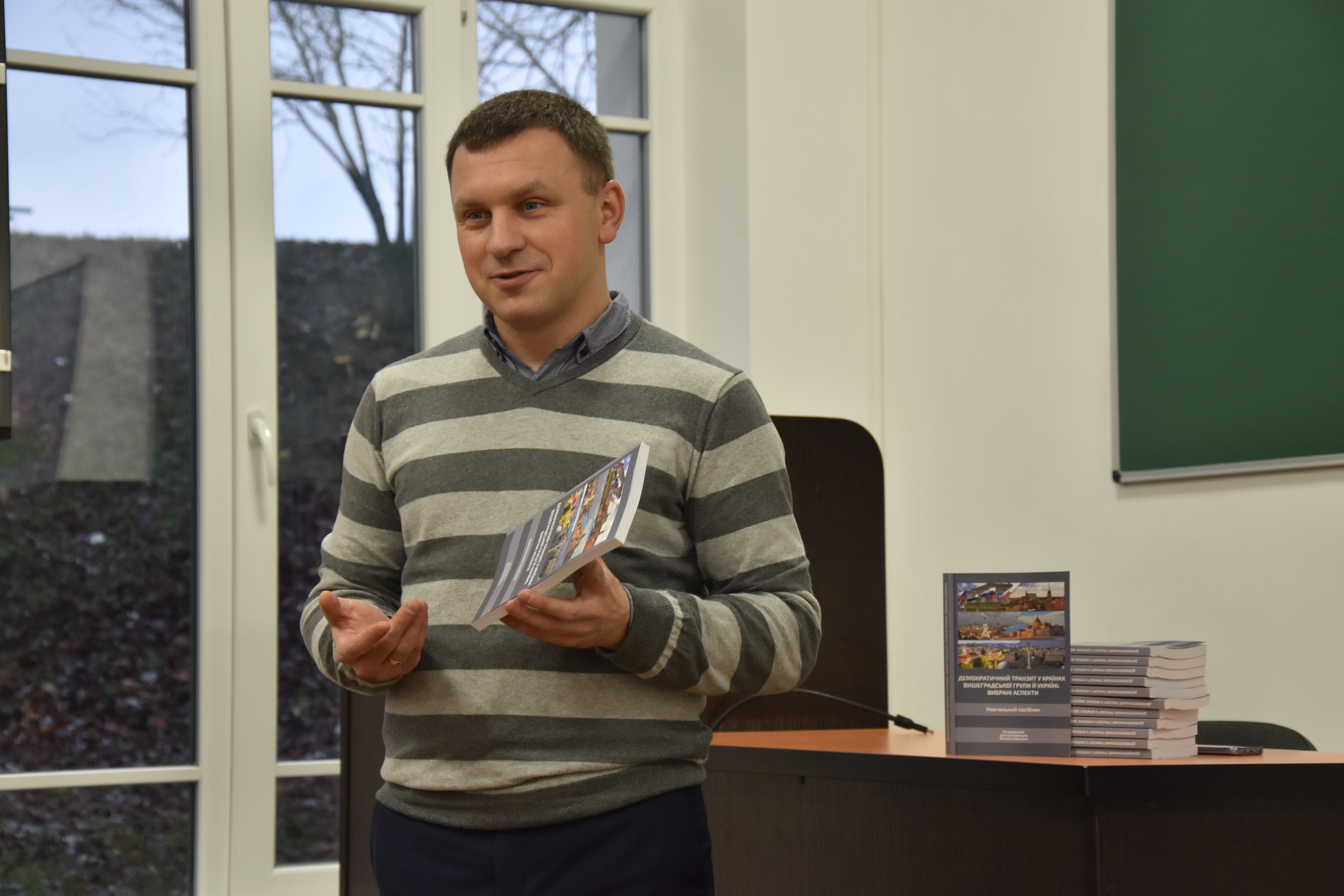
«One of the major post-communism problems is the development stability. The Visegrad Four set the goal to achieve it in the region-wide. Besides, the Visegrad Four joined efforts to popularize the culture of it member-states, to build scientific and educational cooperation as well as to develop transportation infrastructure and maintain energy security. As the result, the project idea was created to develop a special course on the democratic transition of the Visegrad Four and Ukraine and present it to the students. This project entitled “The Comparative Study of Demoratization: Transition Politics in V4 countries and Ukraine” was supported by the Visegrad Fund (V4EaP Visegrad University Studies Grant No. 61610036). In terms of this project and the course lecturing, this book was created. However, we decided to shift the approach to the lecturing material a little so as not to duplicate the initial course topics. This book is rather an addition to the facts analyzed in the classes, aimed at helping students out with detailed dealing with certain issues. That is why a number of expert authors from Ukraine, Poland, Czech Republic and Slovakia were invited to contribute to this work. Each of them was proposed to focus on that very V4/Ukraine democratic transition issue which is the closest to his scientifc interests. In this way, the book concept lays in putting together various texts on selected aspects of the V4 nations and Ukrainian development.» - said the co-coordinator of the project Vitalii Lebediuk, Dean of the Faculty of Political Studies and Information Management.
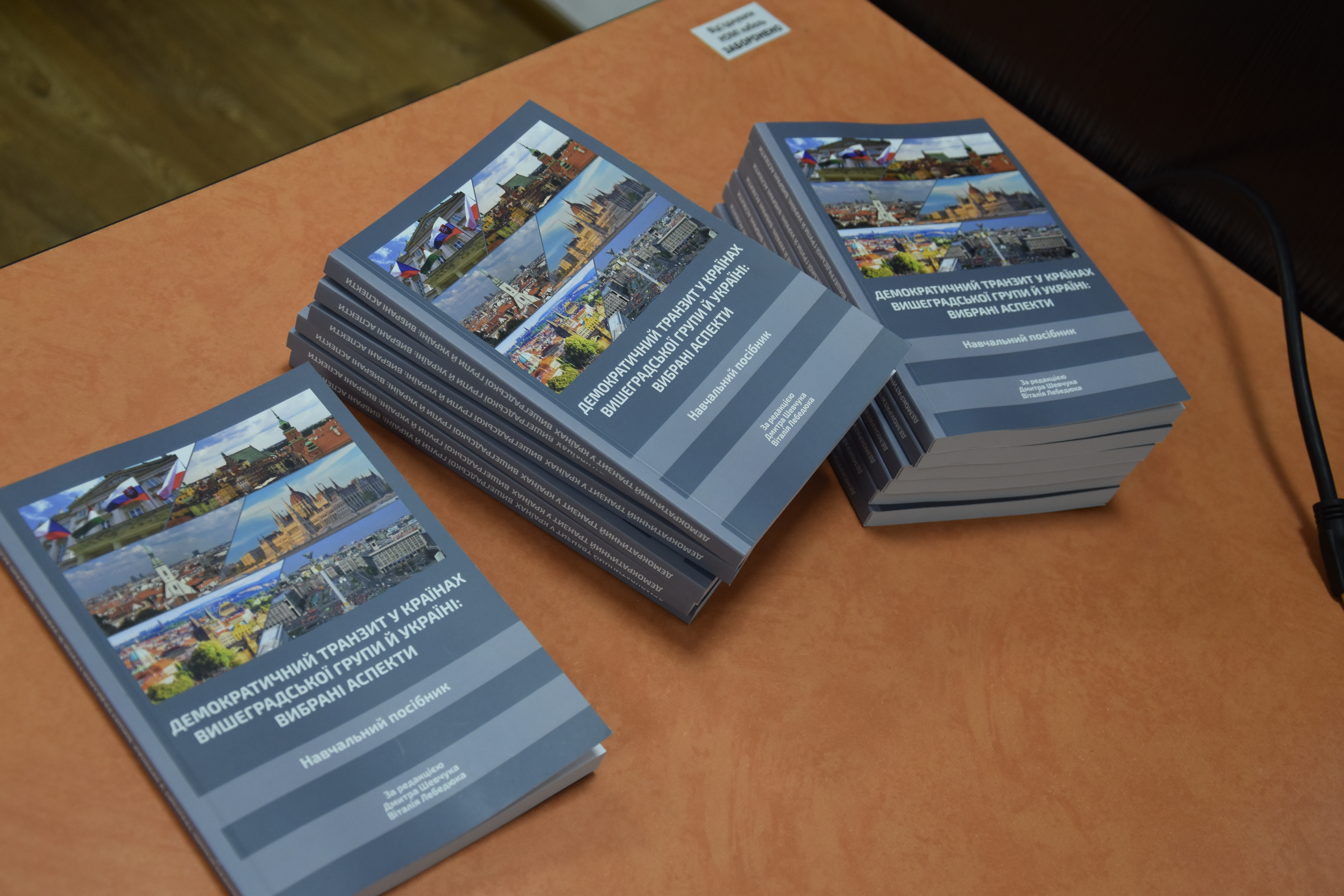
The book consists of ten topics. It is opened by the text written by Vitalii Lebediuk on the main stages and basics of the Visegrad group creation. General aspects of the modernization theories and democratic transition are analyzed in the next text by Dmytro Shevchuk. Theoretical aspects of the studying of political changes in Ukraine are outlined by Yuriy Matsiyevsky. Miloš Brunclík and Michal Kubát analyze the Czech parliamentarism after the 1989s. The main aspects of Slovakia development and its way towards economic prosperity and international emancipation are studied by Peter Terem. Oleksandr Kashynskyi in turn takes his interest to the influence of populism in Poland, Hungary and Ukraine. The next part is dedicated to what Vitalii Lebediuk defnes as the parties system transformation problems in the post-communist countries. The influence of Ukrainian crisis on transformations in the Central and Eastern Europe states is studied by Bartosz Jóźwik and Tomasz Stępniewski. The next part by Tomasz Stępniewski demonstrates the Polish view on Ukraine. And the final part written by Taras Zhovtenko, sheds light on the V4 and Ukraine relations’ evolution and security aspects.